

Diels-Alder reaction
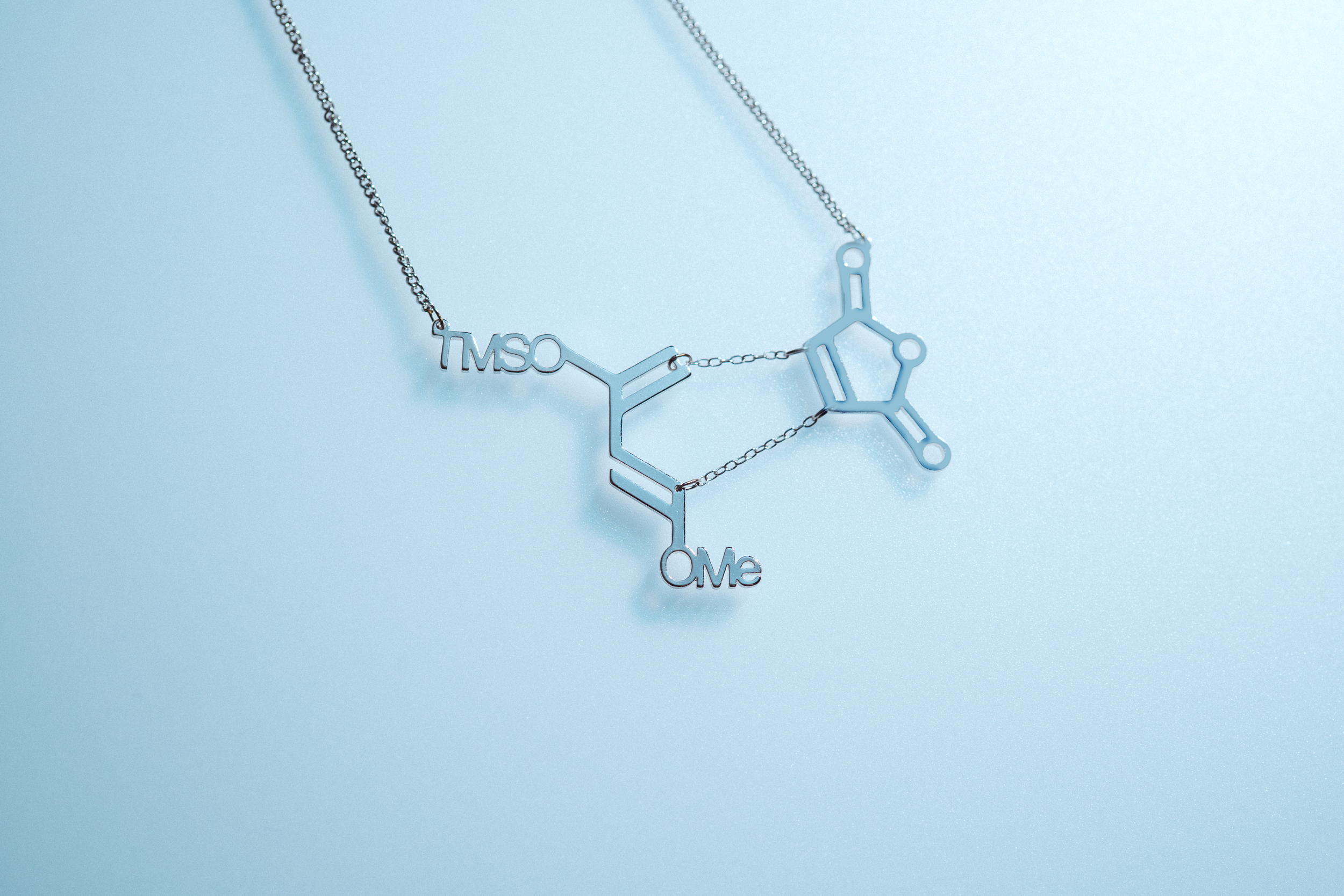
The Diels-Alder reaction is a century-old transformation discovered by Otto Diels and Kurt Alder. This powerful reaction earned them the Nobel Prize in 1950 and remains one of the most widely used tools in synthetic chemistry today. A four-carbon piece on one side meets a two-carbon piece on the other, and together they form a six-membered ring. The arithmetic looks simple, 4 + 2 = 6, but in practice the reaction only proceeds smoothly when the partners are carefully chosen.
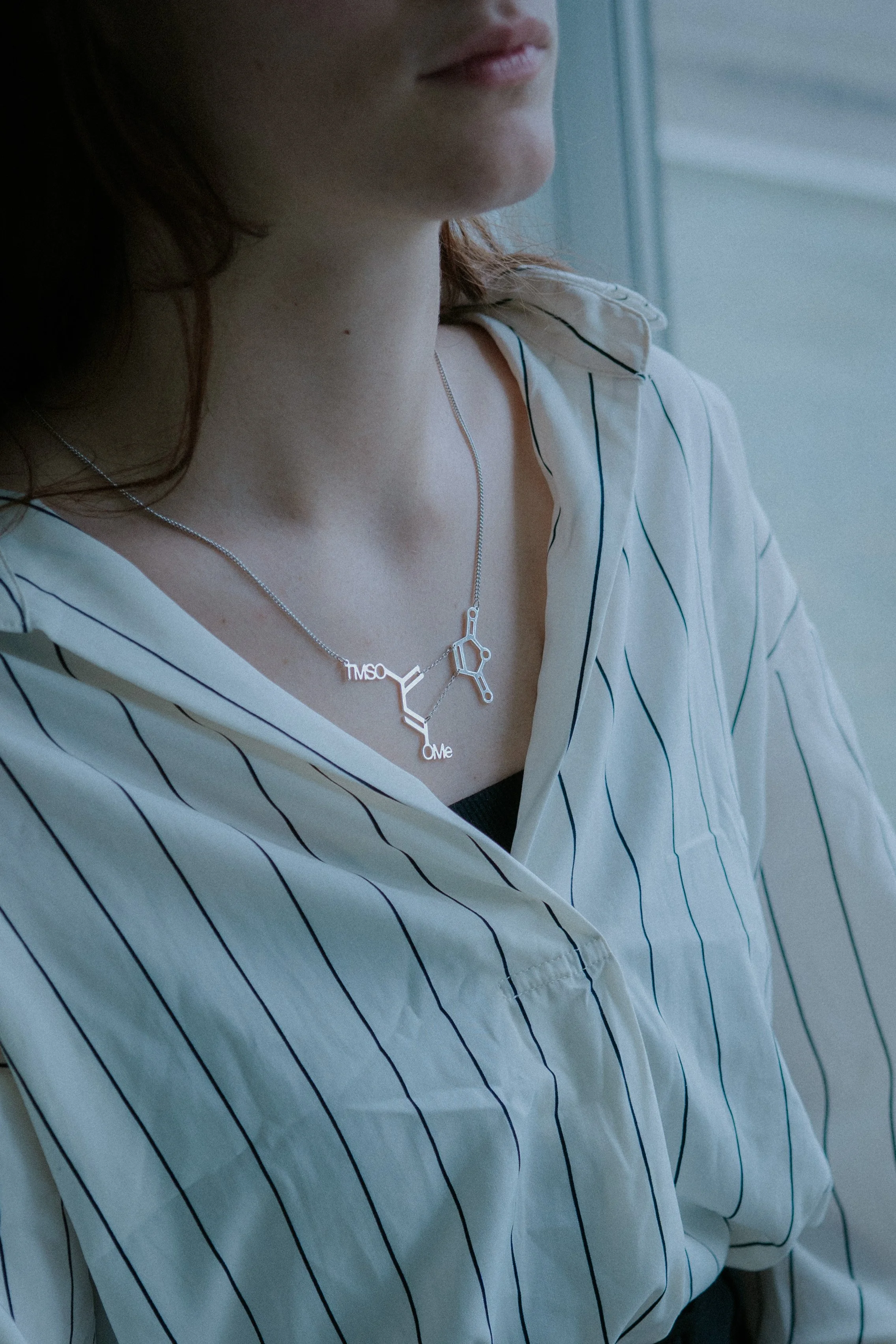
This necklace captures the transition state, that fleeting moment when the two pieces have met but the new bonds have not yet fully formed. The pairing shown here is an almost perfect match of reaction partners, the kind that gives a clean, satisfying reaction in the flask, now suspended permanently at the instant of becoming.