
Indigo
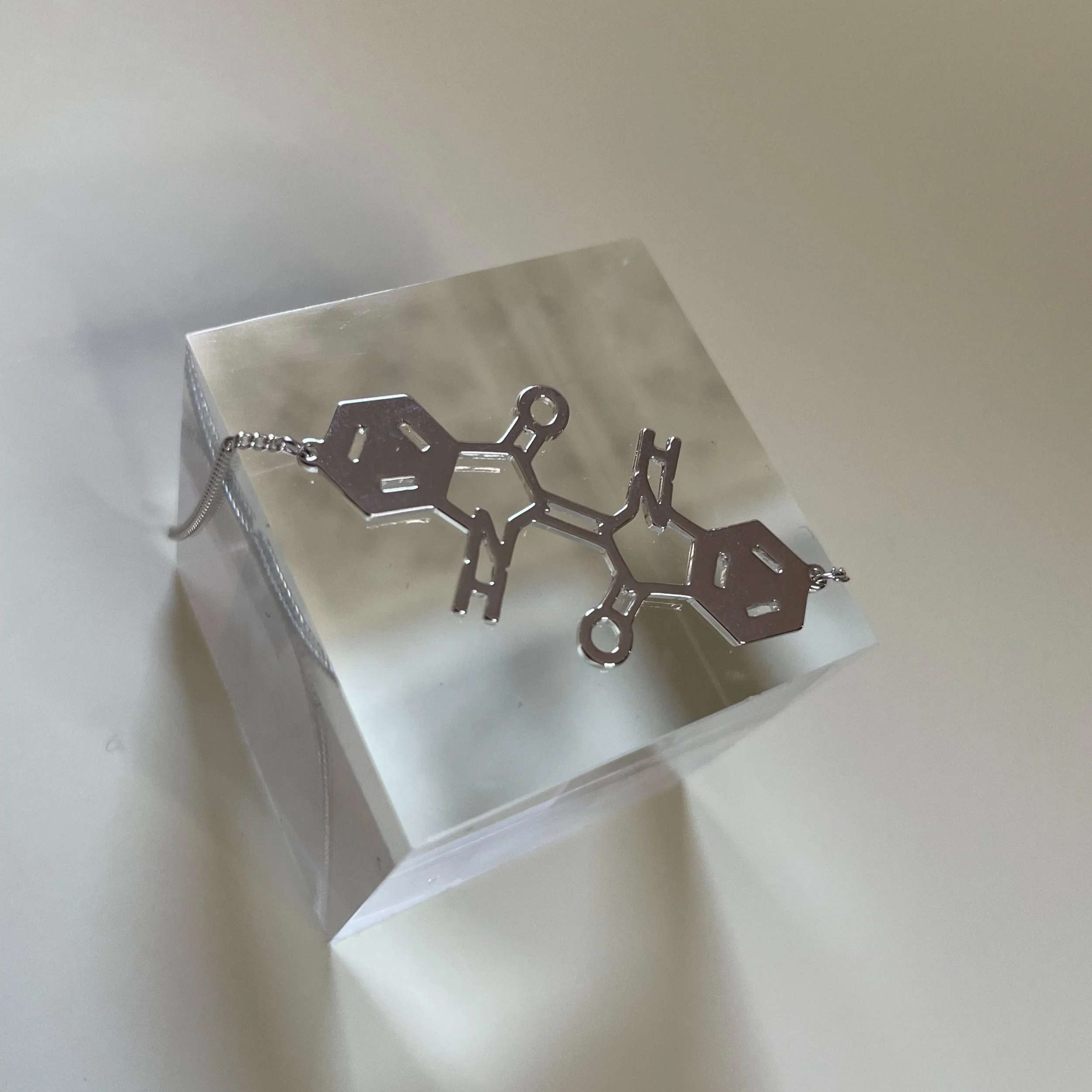
Indigo is a beautifully symmetric molecule with one of the longest histories of any dye in the world. Its structure is rigid and almost perfectly flat, which makes it stubbornly insoluble. That same insolubility is the reason indigo dyes only the surface of each fiber rather than soaking deeply through it, and it is also the secret behind how denim fades. The pale wear at the knees, the soft halos around pockets, the worn-in character of an old pair of jeans, all of it traces back to indigo's reluctance to dissolve.
Working with such a difficult dye was not easy. Long before modern chemistry offered cleaner methods, dyers turned to stale urine to coax indigo into a soluble form, a slow fermentation that made the color usable on cloth. People persisted through these strange and demanding techniques for one reason: they loved the color. The blue we wear today is the result of centuries of patience and invention.
In this piece, the bead at the center holds the symmetry of the indigo molecule itself, a quiet tribute to a pigment that has shaped textiles, fashion, and human ingenuity for thousands of years.